Article Summary: Pennsylvania House Bill 2129 – Proposed Natural Gas Severance Tax
Pennsylvania House Bill 2129 proposes a new severance tax on unconventional natural gas wells while keeping the existing impact fee. The article outlines key provisions, compares rates to peer states, and highlights practical implications for producers, landowners, and investors.
- Tax rates: Imposes a 9% base tax plus an additional 0.5%–2% tied to U.S. natural gas export levels.
- Impact fee credit: Retains the impact fee and allows a prior-year credit against severance tax, subject to proration and carryforward limits.
- Compliance: Adds registration, digital wellhead metering, annual reporting/payment, and significant penalties and enforcement tools.
- Stakeholders: Addresses implications for producers, landowners, and investors, including restrictions on cost-shifting to landowners.
Pennsylvania House Bill 2129 proposes a significant change to the Commonwealth’s taxation framework for natural gas production. The bill establishes a new statewide severance tax on unconventional natural gas wells, while preserving the existing unconventional gas well impact fee. It creates a detailed regulatory structure governing reporting, compliance, penalties and enforcement. If enacted, this bill would represent the most substantial adjustment to Pennsylvania’s natural gas tax structure since the adoption of Act 13 in 2012.
Key Provisions if the Bill is Passed
1. Creation of a Natural Gas Severance Tax
The bill imposes a severance tax beginning July 1 following enactment. Producers will need to pay tax annually on the market value of natural gas extracted from unconventional wells.
- Base Tax: 9% of the annual market value per unit (Mcf) after post-production costs.
- Additional Tax: 5%-2% depending on U.S. natural gas export levels.
- The additional tax would be at 2% if exports remain at 2025 levels.
Impact: This represents a notable cost increase compared to the current impact-fee only system.
2. Retention of the Impact Fee (Act 13)
The current unconventional gas well impact fee remains in place. Producers may claim the prior year’s paid impact fee as a credit against the severance tax, subject to limits:
- First-year credits are prorated.
- Credits cannot be carried forward more than 12 months
Impact: Although credits will offset some tax liability, producers should expect a net increase in annual tax burdens.
3. Exemptions
The severance tax does not apply to:
- Gas sold/used within five miles for manufacturing purposes.
- Gas provided to a lessor at no cost for personal use.
- Gas from storage fields
- Qualifying stripper wells ( 90 Mcf/day for every month in the previous year).
Impact: Low-production wells and certain local-use gas may avoid the tax altogether.
4. Registration and Metering Requirements
Producers must: 1. obtain a registration certificate within 60 days of the effective date and 2. install and maintain digital wellhead meters on all unconventional wells (for meters installed going forward). Failure to register can result in fines of $300-$1,500 per day and a penalty of $1 per Mcf extracted without registration.
5. Reporting and Payment
Producers must file a severance tax report and pay the tax by June 30 each year. Late filing or late payment triggers penalties of:
- 5% per day for late filing or payment,
- 200% of liability for willful failure to file.
6. Enforcement, Audits and Penalties
The Department of Revenue gains broad authority to:
- Conduct audits and examinations,
- Compel production records,
- Issue assessments within defined time limits (3-6 years depending on circumstances),
- File tax liens on producer property for unpaid taxes,
- Criminal penalties apply for fraudulent returns, failure to remit taxes or obstruction of audits.
7. Restrictions on Cost-Shifting to Landowners
Producers are prohibited from passing severance tax obligations onto landowners or lessors. Any contract clause requiring reimbursement of the tax is void and unenforceable.
8. Use of Revenue
All severance tax proceeds, including penalties and interest, will be deposited into the Pennsylvania General Fund.
Comparison of the Proposed Bill to Other States
| State | Typical Rate Structure |
| Pennsylvania (proposed) | 9% base + 0.5–2% additional (up to 11%) |
| Texas | 7.5% (with major exemptions) |
| Oklahoma | 7% (5% for new wells) |
| Louisiana | ~$0.1052 per Mcf (≈1–2%) |
| West Virginia | 5% |
| Colorado | 2–5% with credits |
Based on the proposed tax, Pennsylvania’s competitiveness decreases as gas prices rise.
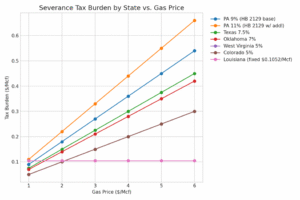
Scenario Modeling Using Historical Gas Price Distributions
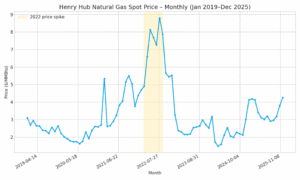
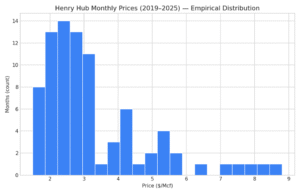
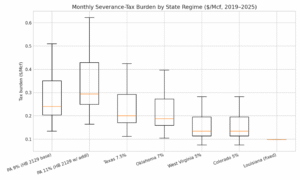
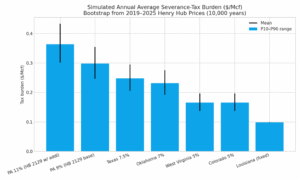
Below is a scenario model that uses the actual historical distribution of Henry Hub monthly spot prices from January 2019 through December 2025 to estimate expected severance tax burdens under Pennsylvania HB 2129 and peer states. (Not modeled: Texas high-cost gas incentives, Colorado ad-valorem credit, and other exemption credits. These can materially lower effective burdens.)
Historical Pricing
Monthly $/Mcf Burdens
Practical Implications for Clients
For Producers
- Expect a substantial increase in annual tax liabilities.
- Update accounting systems to incorporate severance tax calculations.
- Ensure digital wellhead measurement and recordkeeping protocols comply with statutory requirements.
- Review lease agreements to confirm tax-shifting provisions are removed.
For Landowners
- Royalty deductions should not include severance tax amounts.
- Leaseholders gain statutory protection from pass-through.
- May require royalty audits to ensure proper treatment in payment.
For Investors/Lenders
- Production cost models in Pennsylvania will increase; may affect project and well economics.
- Regulatory compliance risks (audit, liens, penalties) should be factored into due diligence.
Summary
HB 2129 would dramatically alter Pennsylvania’s approach to taxing unconventional natural gas production by introducing a severance tax with a high effective rate, strict compliance requirements and broad enforcement powers. Stakeholders- especially producers- should monitor the bill closely and prepare for potentially significant operational and financial impact. The bill is still in the early stages and Schneider Downs will continue monitoring its progress through the legislative process.
About Schneider Downs Energy & Resources Services
The Schneider Downs Energy & Resources industry group provides specialized financial advice and services to our clients in the oil and gas, mining and aggregates, forest products and alternative fuel and energy industries throughout the Columbus and Pittsburgh regions. Our extensive knowledge of industry issues enables us to provide proactive audit, tax and management consulting services.
To learn more, visit our Energy and Resources Industry Group page.